
‘The Substance’ (2024) – Review

Since the Oscars concluded earlier this month and it had some nominations, I figured I’d write out my thoughts on ‘The Substance’ – directed by Coralie Fargeat and starring Demi Moore, Margaret Qualley and Dennis Quaid.

IMDB synopsis: A fading celebrity takes a black-market drug: a cell-replicating substance that temporarily creates a younger, better version of herself.

SPOILERS AHEAD

At its core, ‘The Substance’ comes across as a darkly humorous commentary on ageism in Hollywood. Specifically, the ageism that plagues women once they hit a certain age bracket and become discardable for producers and executives. Though, the film shows that it’s not exclusively a concern for women as a man is shown to take the “substance”. But the narrative chooses to focus on a woman, possibly due to a statistical reason.

The casting is actually an interesting dichotomy between starlets of the past and present: Demi Moore was an icon of the 80’s to 00’s and stars as Elisabeth Sparkle, the once famous and now fading celebrity. Margaret Qualley is a contemporary example of a beautiful and rising actress, starring as Elisabeth’s alternate self ‘Sue’.

The vanity of physical appearance for Elisabeth/Sue is notably obsessive. Elisabeth is a famous celebrity who has been leading a TV exercise programme up till her 50th birthday, when she is basically fired. She, honestly, looks very good for her age. On the other hand, the sleazeball producer Harvey (played by Dennis Quaid and an interesting name choice) is clearly allowed to be just that. He is overheard by Elisabeth criticising her age and the need for someone new and fresh. As he sits eating in a scene, the gross mess of food he viciously consumes can be interpreted as a manifestation of the power he has. In fact, he is probably the only male character to have some prominence.

Presenting the visible signs of aging is deliberately represented as horror. The male nurse tending to her in the hospital promotes ‘the substance’ as the answer to her problems. The methodology of the ‘substance’ is definitely fitting for a body horror. The fluids, syringes and tubes are initially reflective of cosmetic procedures. But the further it is used by Elisabeth/Sue recklessly, the more it resembles a type of medical support to keep one and the other self alive. The ‘new self’ emerging through the spine of the individual is gory and perhaps imitates a rebirth, though this is on a fine line of subtle/obvious.

There is a lot of nudity in the film and its purpose? I considered it Elisabeth’s perception on revelling in her new youthful body and how ‘perfect’ it appears and the opposite, Elisabeth disappointed in her original body. Her new body is admired in the bathroom mirror’s reflection, a slow and intimate examination of what can be assumed is supposed to be the ‘ideal’ female body. Even Sue’s pink workout outfit paired with the 80’s style exercise videos being produced deliberately accentuates her figure, especially with the close-ups on her legs and buttocks.

The bodies of Elisabeth and Sue are supposed to be the same person. Yet, the film shows how much of a stark difference there is between the two identities that they may as well have been separate entities. While Sue is active, she lives out a fantasy that is liberating and exciting to her thanks to her pretty privilege.

A sexual encounter is almost ruined when Sue realises she needs to switch back to Elisabeth’s body. Even as a nosebleed signals the urgency to switch back, Sue bends the rules by taking more fluid. But the fantasy doesn’t want to be diminished and Sue takes more fluid from the latter body to continue. At this point of conflict between them, Elisabeth has been neglected and her body is visibly deteriorating through rapid ageing. The first of these is her right index finger becoming wrinkled.

Elisabeth has a chance to go on a date with a high school acquaintance, who openly said she’s beautiful. But as she is prepped to leave, Sue’s image plastered on the billboard across her apartment and the mirror’s reflection halt her to frustratingly accept her perception of being old and losing her beauty. This happens several times until she is finally defeated and the date doesn’t happen. When Elisabeth is active, she exemplifies her envy over Sue’s adoration and fame. The latter body even bad mouths Elisabeth on TV as she recklessly cooks food, eats and messes up the apartment space as her way of expressing control.

Both bodies battle over each other and are frustrated over each other’s actions. Sue is the preferred body bringing in the gratification while Elisabeth is old and so should just wither away.

Elisabeth contacts the substance’s company over Sue’s lack of care over her body. Sue contacts him over Elisabeth’s rage-induced mess. The soothing male voice on the phone keeps reminding Elisabeth/Sue that they are one person.

Sue’s ultimate stockpiling of fluid leads to a prolonged period of Elisabeth being neglected. By the film’s final act, Elisabeth’s body is a shrivelled elderly woman who struggles to even walk upright. Reaching a breaking point, Elisabeth attempts to terminate Sue’s body but as she injects the termination serum, she glances at the billboard outside of Sue’s upcoming New Year’s Eve event. The desire to revel in the youth brought about once more through Sue’s body makes her desperately try to revive Sue.

However, Sue is surprisingly resuscitated and both bodies are simultaneously conscious. Realising Elisabeth was terminating her, Sue begins a bloody, brutal fight between the two bodies. The beautiful Sue emerges victorious as the now deteriorated Elisabeth’s body finally dies, moving ahead with the New Year’s event.

The film reiterates the ‘you are one’ mantra as a reminder to the audience as well. However, it does feel difficult to understand the same-individual-but-different-bodies conundrum, especially when Elisabeth/Sue seems confused herself.

Sue is gorgeously dolled up in a beautiful gown for the event, resembling royalty now that she has seemingly “won”. However, another bloody situation occurs but this time, her teeth come loose and her fingernails are falling off. Now Sue is desperate to return to the apartment to fix this. This can be reflective of cosmetic procedures not being parallel to the body’s natural aging and so more of the former is sought after. Using the dead body of Elisabeth, Sue sets up the substance and desperately uses the activator, even though it cannot be used more than once. Thus creates a new body birthing out of Sue: Monstro Elisasue.

Monstro Elisasue is a mangled, deformed body with Elisabeth’s original face on the back, mouth wide open as if in a permanent shock. The monstrous body dresses up for the event, tapes a photo of Elisabeth’s face (with extra drawings) on her own and goes to the event. This sequence is quite sad because of the extreme desperation Elisabeth has to stay ‘beautiful’ at all costs.

As a morbid, final attempt at trying to stay the beautiful, youthful celebrity, Monstro ElisaSue is met with immense backlash by the bewildered and disgusted audience creating a literal bloodbath. The scene is over-the-top with individual members standing up and yelling awful names, screaming. This was reminiscent of how nasty our words can be when celebrities “ruin” their faces with plastic surgery. I see plenty of these comments on social media often in pop culture circles, e.g. ‘they used to be so handsome/beautiful! what happened? what did they do?’.

The final scene shows Monstro Elisasue at her end. The body disintegrates and only Elisabeth’s face is able to slide towards her star on the Hollywood Walk of Fame, indulging in a brief fantasy of the fame and adoration she had once upon a time. As even the face disintegrates into a puddle of blood, a floor scrubber (the next day) brushes the star clean and so takes the last bit left of Elisabeth’s existence. The tragic irony is that her name is permanently embedded on the streets of Hollywood yet there is hardly any adoration from the people.

I’ve come to interpret this as a perspective that people should supposedly remember a celebrity in their prime, as seems to be the case in real life.

‘The Substance’ is a weird satire on an issue that is well-known and discussed. The comedic approach to the issue was somewhat refreshing and the horror is applied where appropriate, though not too effective. The foundation of real celebrities who have undergone cosmetic procedures to maintain a certain appearance is clearly the inspiration. Maybe the audience is to come to the realisation that aging shouldn’t be discouraged and look out for those falling into cosmetic solutions to prevent any unfortunate outcomes to the body.

Beyond the message and some humour, I’m not sure it had such a profound effect on me personally. Yes, women in Hollywood are subject to unnecessary scrutiny over appearances. I, as a woman, have had my fair share of self-esteem issues tied to physical features that persist. But the substance didn’t scare me that much about the inevitable future where I’ll age. Thankfully, the sci-fi elements make the substance an unlikely development in reality. As a horror, it could’ve been effective without the substance itself.

Letterboxd rating: ⭐⭐⭐
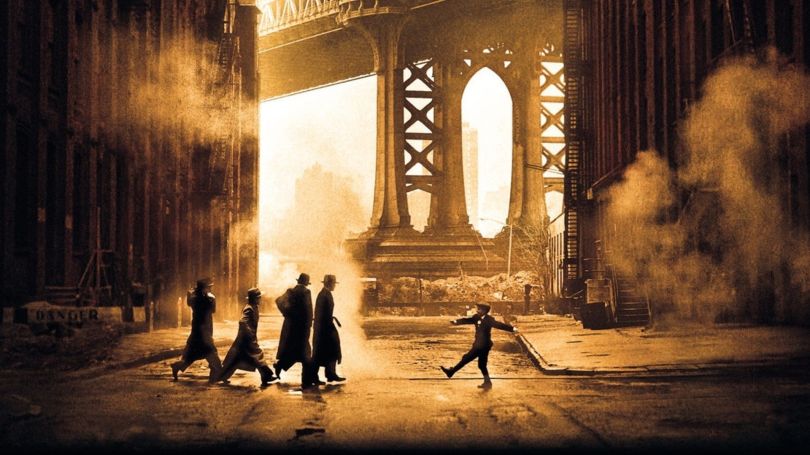
Movie Maladies: ‘Once Upon A Time in America’ (1984)

So while writing an earlier blog post, I thought of a way to revive my blog (hopefully) for good. On a Monday, a bad day of the week, I can write about a movie or series that I hate and think are bad.

Therefore, I welcome you all to ‘Movie Maladies’ first entry: Once Upon A Time in America. This is probably going to be a controversial take but it’s my opinion. Sergio Leone’s 1984 film has a definitive title, adapted from the novel The Hoods by Harry Grey, which is intended as an epic crime story with Robert De Niro as the leading man. It sounds exciting to read such a description and the film’s poster only adds to that excitement.

SPOILERS AHEAD / CONTENT WARNING: mentions of s*xual violence/r*pe

IMDb synopsis: A former Prohibition-era Jewish gangster returns to the Lower East Side of Manhattan 35 years later, where he must once again confront the ghosts and regrets of his old life.

I like gangster cinema. Films like ‘The Godfather‘ (and ‘Part II‘), ‘Scarface‘ and ‘Goodfellas‘ are among my favourites. ‘Once Upon A Time in America‘ has pretty great reviews and has an IMDb rating high enough to enter the site’s Top 250 list. So, I was expecting to really enjoy it.

Unfortunately, I didn’t. ‘Once Upon A Time in America’ is a tedious, gratuitously elongated mess with a deviance to its morals. It was a disappointing and uncomfortable experience that didn’t meet expectations.

A Tedious Narrative

Long runtimes can be an issue for me since I struggle with attention. This might be the longest film I’ve seen, at least the longest English-language film since I’ve seen Indian films that go on for 3 hours+. Anyway, long runtimes aren’t that much of an issue for me so as long as the film is actually good. Like I mentioned earlier, The first two Godfather films are personal favourites…and they have long runtimes. But they’re great pieces of cinema that make the runtimes worth it.

I didn’t think this of ‘Once Upon a Time in America‘. The narrative is intriguing on the surface but gratuitously lengthy at its core. Noodles (Robert De Niro) returning to New York to face his past didn’t need to last 3 hours and 49 minutes. Especially when the narrative progression is slow and filled with some highly questionable content. The bottom line is that I was bored, exhausted and disturbed.

The introduction outstays its welcome with the added irritation of a telephone ringing. Noodles is being hunted by some shady-looking men, who kill what appears to be his girlfriend and then search through a theatre. This scene also lingers on a shot of a shady man rubbing the tip of his gun over a woman’s bare breast… which was pointless and confusing. The representation of women is a whole other rant that will appear below.

Meanwhile, Noodles makes his way to the train station to leave the city indefinitely. There was a transition from Noodles in the 1930s to Noodles in the 1960s, accompanied by an orchestral version of The Beatles’ ‘Yesterday’. I had to do a double-take because The Beatles’ music was one of the last things I expected from this film. It was jarring, I can’t lie.

As the story continues, following Noodles reuniting with his old neighbourhood and friends, many flashbacks are placed in between to try and flesh out the story. The transitions between the past and present are average except for one: Noodles’ release from prison and being met by Max.

Young Noodles stabs a notable gangster to death as revenge for shooting a friend dead. He goes to prison and is released as a young man, met by Max (James Woods) and their group reunites to become engaged in organised crime. While this life is not glamourised (thankfully), there is little to care for in terms of the ‘why’.

Their crimes are basic, their friendship has little substance and the characters themselves are hardly memorable. By the final scene, a mundane end to the characters of Noodles and Max is all there is to conclude the 3 hours 49 minutes.

I’m aware that a cut version of the film is considered below average. But as for me, the full-length film isn’t very good to begin with.

Problematic Representations of Women and Children

The main issue I have with ‘Once Upon A Time in America’ is how it portrays the women and the younger versions of the primary characters. How on earth did they allow this to happen?!

Early in the film, Noodles removes a tile in the bathroom wall to peek through a room, flashing back to his childhood. Young Noodles watches Deborah (played by a very young Jennifer Connelly), his ‘love interest’ as she practices a dance routine to music. She appears aware of his peeping and once she’s finished, there’s an unnecessary shot… A reminder that Jennifer Connelly was around 11 or 12…

Unfortunately, there was more after this. Young Noodles and a neighbourhood girl named Peggy have a scene in the bathroom of their block of flats. She is apparently an underage prostitute and is seen in vulnerable situations that are not appropriate given her age.

I’m not sure why anyone thought any of this was necessary or acceptable.

Now onto the next category: women. In one instance, the men perform a diamond heist with some assistance from Carol (Tuesday Weld). She tells Noodles to make their attack more realistic and he proceeds to r*pe her. The scene is intense and uncomfortable and there is no consequence for Noodles’ actions. In fact, Carol later has to identify which of the four men r*ped her by examining their lower regions. The scene seems to intend on being humorous, a jarring façade over what is a clear immoral act. She eventually enters a relationship with Max, who has moments of yelling at and berating her.

Carol (Tuesday Weld) identifying the men.

That must be it, right? Wrong! The next r*pe scene is arguably worse. A grown-up Noodles also meets a now grown-up Deborah (Elizabeth McGovern) and their connection is set to be romantic. After an evening spent on a lavish date, where they also open up about their feelings, Deborah reveals her plans for the future. Noodles is unable to accept this. During their car ride home, Deborah kisses him. But he then brutally r*pes her despite her audible cries to stop. The scene goes on for a shocking few minutes and Deborah is visibly violated and her anguish ignored as the audience can do nothing. The driver of the car can listen to this deviancy, stopping the car before Noodles tells him to drop Deborah off home.

Noodles and Deborah go on a lavish date before it all goes extremely offensive.

To rub salt in the wound, the present day Noodles meets Deborah again and there is no apology or much remorse from him. Deborah even appears fine to speak with him, barely exhibiting any signs of trauma.

To trivialise something heinous like sexual violence is flabbergasting. The film doesn’t bother to highlight these problematic scenes as transgressions and the audience seemingly has to continue sympathising with Noodles. It’s hard to find Noodles a believable character bearing a burden of regret when his actions towards women (including his supposed love interest) is reduced to nothing.

Pointless & Unsympathetic Characters

The film represents a significant Jewish community in New York and this identity is hardly explored. Other than a few signifiers of Jewish religious and cultural traditions, this aspect to the characters’ identities may as well have been omitted altogether. In fact, I initially assumed that the film was another in the collection of Italian-American gangster stories.

Noodles and Max are two central characters. But the gang also includes Patsy and Cockeye, who’s names I had forgotten about until checking the Wikipedia page. The latter pair have little to do in the film’s narrative other than be friends and fellow criminals to Noodles and Max.

As mentioned already, Noodles is not only a criminal but also a r*pist. For being the protagonist who had to run and hide for 30 years after his friends were murdered, it seems as if he’s supposed to be sympathetic given his life experiences. However, the unnecessary scenes of violence against women truly mars his identity as a decent man. The act of making amends once Noodles returns to New York City would have been admirable had it not been for the complete skip over his crimes against Carol and Deborah. I had little change in perception of Noodles by the final scenes and the final shot of his episode in the opium den is anti-climactic. Therefore, I couldn’t care for Noodles at all once the film finished.

The only characters I pity are two of the female leads: Deborah and Carol.

Any Redeeming Qualities?

I wouldn’t say the film has elements that ‘redeem’ it. Rather, some good standalone merits should’ve been in a better film.

The acting from the main cast was good. It was my first James Woods role and as Max, he had scenes where he shone and was on par with Robert De Niro. If the story was as good, it wouldn’t have been wasted.

There is one shot of the younger versions of the characters walking across the street, with the Brooklyn Bridge in the distance, framed by the local buildings. I suppose this is iconic and recognisable to cinephiles. But it’s also a very beautifully constructed shot. Again, it deserved to be in a better film.

Conclusion

There you have it, I dislike ‘Once Upon A Time in America’. It’s a problematic mess that did not provide an interesting story or contribute significantly to the gangster epic genre. I’m aware that many people hold this film in high regard. But I couldn’t appreciate it the same way.

This is my first Sergio Leone film, so I hope the Dollars trilogy and Once Upon A Time in The West will change my opinions.

Letterboxd rating: ⭐