A little late happy new year! The end of last year was rather quiet on this blog… However, it’s a new year, and I’ve been settling into some new and exciting opportunities! I will still have time for writing here, and to start off with a yearly tradition, here are all the films I watched in 2025. You can tell that this was a quiet year for movie-watching, though…
I think a goal for 2026 is to definitely watch more films compared to 2025… Additionally, I’ll continue with Movie Maladies, reviews and more blog post series like ‘favourite film fashion’ (including some new ideas). Here’s to more cinema in this new year!
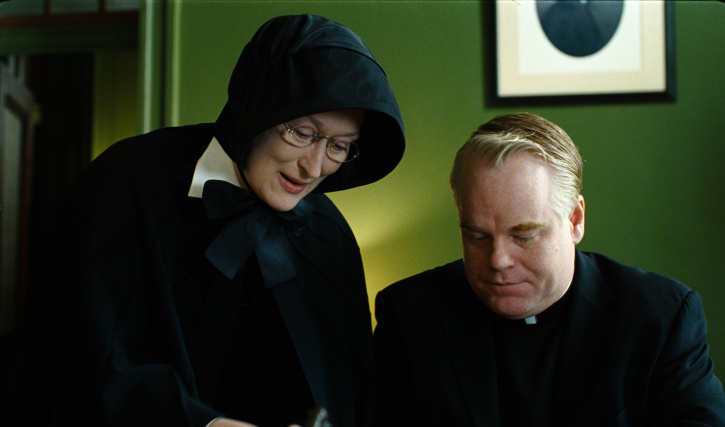
May and June were quiet months and for that I apologise. However, I am back with another review! A recent watch which was a fascinating exercise in representing ambiguity was ‘Doubt’, directed by John Patrick Shanley and starring Philip Seymour Hoffman, Meryl Streep and Amy Adams.
IMDb synopsis: A Catholic school principal questions a priest’s ambiguous relationship with a troubled young student.
SPOILERS AHEAD / CONTENT WARNING: mentions of sexual abuse.
While not a Catholic, I am a practicing Christian woman who attended a Catholic school as a child and is aware of the unfortunate, rampant abuse that exists in the church. ‘Doubt’ appeared as honest as it can be from the Netflix preview that it would delve into this subject.
It should go without saying that the faith has no place for such vile acts against innocents. So many church leaders have a record of covering up sexual abuse instead of cleaning up the priesthood to the authorities. ‘Spotlight’ (2015) is a good example of portraying the history around the exposure this controversy was subject to. However, ‘Doubt’ suggests a grey lens into this notorious stain on the Catholic church.
Fr. Brendan Flynn (Philip Seymour Hoffman) leads a Catholic parish in The Bronx, New York during the 1960’s. His unique ideas are a step forward for the church to reach more Christians, and his views are progressive for the time. It was immediately apparent that Fr. Flynn would be the object of hostility.
The overarching strategy is to play with the audiences’ preconceived notions around Catholic clergymen and the effects of rumours/accusations against these clergymen. The connotations of priests proved to exacerbate the dilemma I felt because a Catholic priest is often a simulacrum of predatory figures in society. The progressiveness of the primary priest character makes Fr. Flynn susceptible to serious allegations as I believe our culture projects these onto male figures in authoritative positions often. I see a lot of dark humour about priests on social media and in real life, and it invariably stems from the church abuse problem.
Additionally, two nuns serve as key personalities for opposing viewpoints. The elder and more severe principal of the church’s companion school is Sister Aloysius Beauvier (Meryl Streep). She has authority and expertise as an elder nun. Sister James (Amy Adams), who is a younger and considerably softer history teacher, is portrayed as the epitome of innocence. Both nuns show ‘stern and disciplinary’ and ‘kind and understanding’ aspects of maternal attitudes towards the students.
First portrayed as a gentle, forward-thinking individual, Fr. Flynn enjoys a positive rapport with the pupils and seems to be especially loved by Sister James. Sister Aloysius, however, seems to regard him with some contempt.
Sister James’s observation of Fr. Flynn putting student Donald Miller’s clothing in a locker sets off the subsequent downhill spiral. Donald gets sent home early after it is discovered that he may have drank alcohol. Sister Aloysius takes this issue extremely seriously after Sister James brings it to her attention.
As a viewer, the movie provided insight into Fr. Flynn’s relationship with the students. He is amiable, mentors the altar boys in their responsibilities during Mass, has long nails, and offers guidance. When other kids knock Donald’s schoolbooks to the ground, Fr. Flynn’s embrace of Donald is the only thing that could be used against him. I am in a position as a viewer to consider Fr. Flynn’s actions improper. But I also want his innate innocence proven because of his portrayal. Is Fr. Flynn really grooming Donald? Or is it a truly considerate gesture? Does it imply, instead, that people conceal darker secrets behind disguises?
Sister Aloysius insists that he did something wrong. She exhibits a mildly hostile attitude after the plot catches flight. Is she trying to control the liberal Fr. Flynn by taking advantage of Sister James’s worry? Or is she truly concerned about a potential instance of abuse occurring within the establishment? In other sequences, she demonstrates her character’s capacity for kindness by gently assisting an old and almost blind sister to her fork over supper.
As a viewer, you had to decide what or who to believe. When Fr. Flynn is accused of being a predator, he has no qualms about voicing his displeasure. He seems to confidently offer succinct justifications and an alibi for his encounters with Donald. The alcohol was the Communion wine, selfishly drank and spilled by Donald and his altar boy responsibilities were terminated as a result. Sister James’ concerns—and perhaps those of the audience as well—are resolved by these explanations. Sister Aloysius, however, is not convinced. Sister James lashes over Sister Aloysius’ allegedly obstinate belief in Fr. Flynn’s guilt, but she is happy with Fr. Flynn’s response.
Fr. Flynn compares the effects of rumours to a shaken pillow over a rooftop and the nearly impossible process of gathering its remnants in his sermon the following Sunday. Philip Seymour Hoffman’s facial expressions in this sequence convey both embarrassment and a hint of rage. It’s possible that this anger over a horrible charge is real. Or his mask is immune to being taken off by an opposing force.
The boy’s situation is revealed during a meeting between Sister Aloysius and Donald’s mother (Viola Davis). Mrs. Miller is a resilient person who looks for heartfelt explanations for the accusations. The father physically assaults Donald because of his apparent homosexuality, and neither mother nor son can stop him. The school also holds the key to his future as the only African-American student. The conversation between Sister Aloysius and Mrs. Miller seemed unclear to me. Because of the Miller family’s circumstances at the time, it appeared that this moment itself hung on moral uncertainty.
A feature-length crescendo is reached at the end of the turgid conflict between Sister Aloysius and Fr. Flynn. The latter flips the nun around and confesses her own, unnamed, transgressions. He is transparent in his belief of Sister Aloysius’ quest for justice being misguided and hypocritical. Then, Sister Aloysius threatens him with the information of his expulsion from a prior parish obtained through one of its nuns. Finally, a seemingly defeated Fr. Flynn confesses his sin and promises to atone for it by leaving his position as parish priest. One could easily assume that Sister Aloysius’ first suspicion—and hence, Sister James’ as well—was correct. The speech takes care to keep the nature of these offences hidden, though.
What else can priests do wrong? Certain sins may still be more taboo than others, depending on cultural and societal “norms.” According to one theory, Donald was mentored by Fr. Flynn, who is homosexual. Fr. Flynn’s progressive persona makes sense if he is a marginalised member of society and ultimately, the church. Perhaps Fr. Flynn’s reluctance to tell Sister Aloysius about his “sin” is due to the taboo surrounding LGBTQI+ identities in the 1960s. However, I’ve also read that when Fr. Flynn responds “No,” he nods his head in response to the inquiry about the inappropriateness of his relationship with Donald, implying differently through his body language.
Whether Fr. Flynn is guilty or not, ‘Doubt’ remains to the very end a deliberately rhetorical story. Sister Aloysius is satisfied with Fr. Flynn’s removal despite her sin of lying to achieve this, though suggests a disappointment in his promotion at another parish. Her cathartic release to Sister James is a display of possessing doubts, particularly towards faith and the church. Is it all worth it if one has to sin for another sin to be exposed? Even this question remains an enigma for the audience to take away. It’s a repetitive tennis match of true or false and we can only be suspended in a limbo alongside the film’s characters.
I found the whole concept exhausting after the film’s conclusion. However, director Shanley’s method of storytelling remains compelling and applicable to social and institutional issues. Nuance is a paradox here but ‘Doubt’ cleverly incorporates it into the central figures and their interactions.
Other than the filmmaking greatness we find while watching cinema, I quite like noticing how much an outfit can be part of the storytelling…or just for its aesthetic prowess. I feel like venturing into a list of my favourite film fashion and there’s probably more to come.
1. Héloïse (Adèle Haenel) – Portrait of A Lady on Fire
The beautiful emerald green dress worn by Héloïse is a fine example of a simple yet regal piece of attire. After she is made aware that a portrait is to be made of her and the growing relationship with Marianne deepens, she finally poses willingly. The dress is a striking contrast with her blonde features, dominating not only the portrait’s frame but the screen’s.
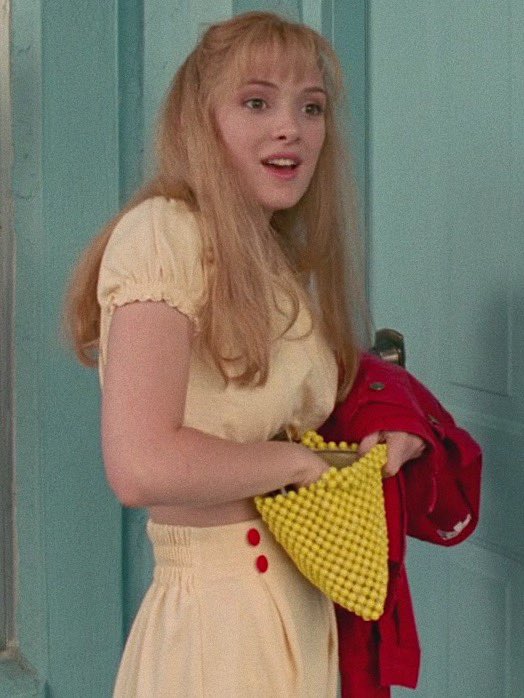
2. Kim Boggs (Winona Ryder) – Edward Scissorhands
A simple outfit that reflects the youth and innocence of Kim, the butter yellow top and skirt is an underrated example of film fashion.
3. Elio (Timothee Chalamet) – Call Me By Your Name
The wardrobe of Elio Perlman is a very simple selection of summertime-appropriate tops, shorts and jeans. But in a retro, summertime coming-of-age mise-en-scene, even the most mundane aspects feel elevated on the screen.
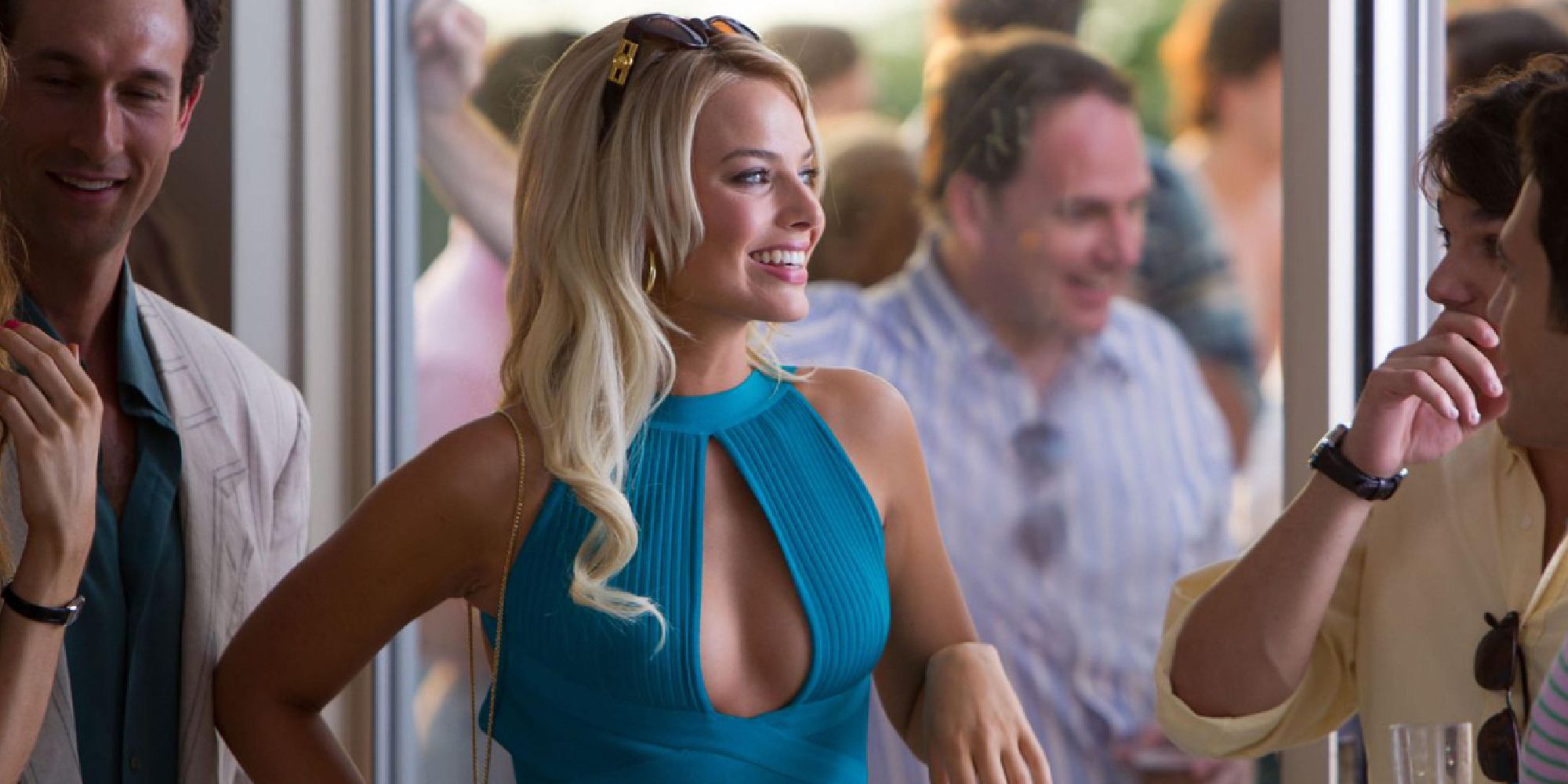
4. Naomi Lapaglia (Margot Robbie) – The Wolf of Wall Street
Naomi’s introduction with her striking blue dress, long blonde hair and sunglasses balanced on her head is the stunning introduction of the bombshell in Jordan Belfort’s life. While their relationship’s initiation is morally questionable, a woman like this is hard to forget.
5. Cady Heron (Lindsay Lohan) – Mean Girls
This film is iconic overall, including its fashion. But I have a fondness for Cady’s increasingly Plastic-inspired outfits. While its a pipeline towards becoming the very thing you’re supposed to hate, it’s too fetch.
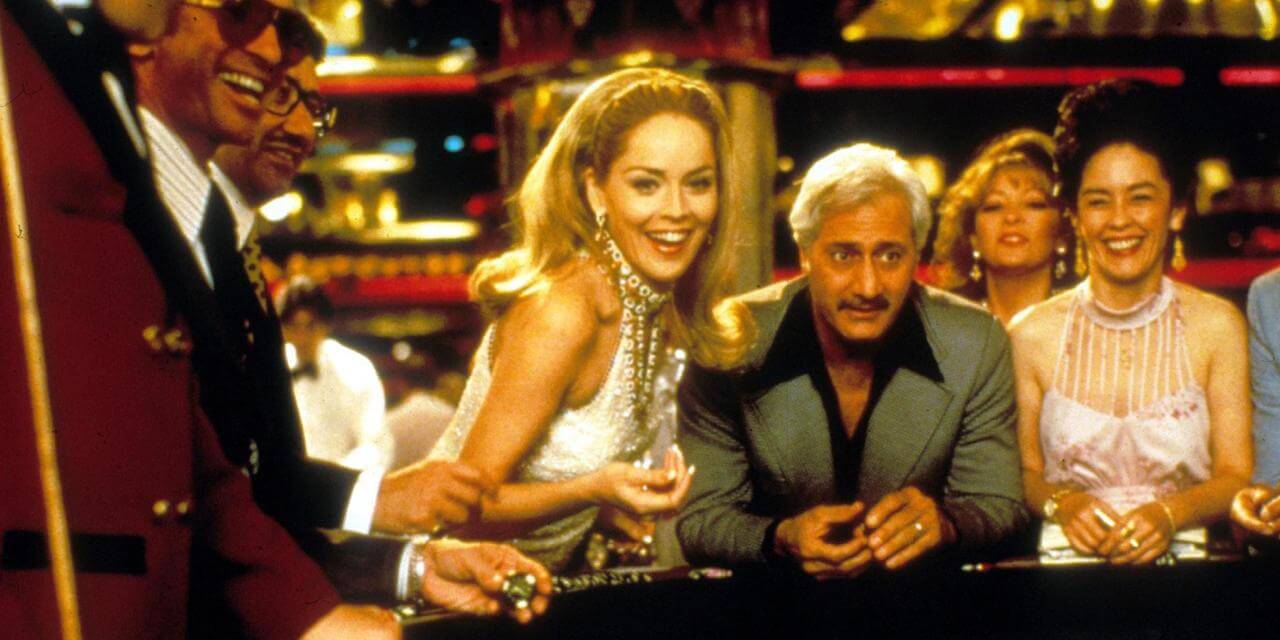
6. Ginger (Sharon Stone) – Casino
Another introduction that becomes unforgettable, Ginger’s shimmering dress, bag and boots exemplifies her playfulness but also her efforts in blending into the crowd of money-obsessed casino patrons. As she unapologetically launches poker chips into the air like confetti, she’s a force to be reckoned with and she’s here to stay.
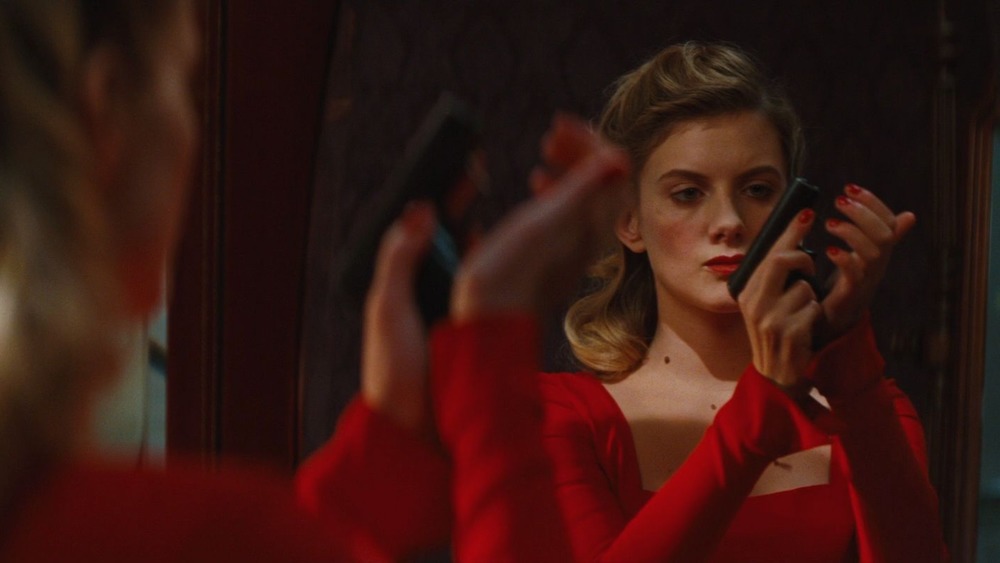
After the traumatic loss of her family and fate landing her with a cinema filled with N*zis, the red dress, hat and netted visor is Shoshanna’s final step to a vengeful femme fatale. She is the boss behind the projector and holds the fate of the entire audience in her hands. Shoshanna’s plan is slightly diverted but even by the end of her story, she literally gets the last laugh.
8. Rose DeWitt Bukater (Kate Winslet) – Titanic
The first night of Titanic’s ill-fated maiden voyage, Rose recounts her melancholy and attempt to end her life by jumping off the back of the ship. While it’s a morbid scene for a moment, the deep red dress she is wearing is just beautiful. As Jack convinces her to abandon this attempt on her own life and saves her from a nearly-fatal slip, the dress and her red hair compliment her so well against that fateful, frigid night aboard the ship.
I had one of the worst movie-watching experiences of my life with this one. I can’t even bring myself to re-watch it properly and even the first time I did, I found myself skipping through some scenes. I had written a scathing review on Letterboxd but I felt like with this new ‘Movie Maladies’ series, I’d go on a much longer rant. As I’ve said previously, this is all my opinion.
IMDb synopsis: Four college girls hold up a restaurant in order to fund their spring break vacation. While partying, drinking, and taking drugs, they are arrested, only to be bailed out by a drug and arms dealer.
SPOILERS AHEAD
A Spring Break Story Gone Wrong
So the plot of ‘Spring Breakers’ is pretty on-the-nose, following four girls who are friends and in college: Brit (Ashley Benson), Candy (Vanessa Hudgens), Cotty (Rachel Korine) and Faith (Selena Gomez). Now, as a Brit (no pun or reference intended), we don’t have spring break culture here in the UK. But I understand it seems to be a big deal for Americans.
Planning the spring break getaway, Brit and Candy decide to rob a restaurant to fund said getaway, bragging about their successes mostly towards Faith, who’s shown to be a Christian girl, with multiple profanities thrown in for good measure. This scene outstays its welcome and feels more ‘being vulgar for the sake of being vulgar’ than reflecting authentic young adult behaviour.
The majority of the film shows the girls in Florida, engaging in the utter wildness that is spring break on the beaches and at parties. The scenes definitely show the madness and hedonistic nature of this sub-culture but it’s difficult to find much substance when the film just propagates ‘spring break is chaotic’ any chance it gets.
The film continues to show Brit, Candy and Cotty getting very cosy with Alien (James Franco), some kind of rapper/gangster wannabe who bails the group out of jail. While his charms work for Brit, Candy and Cotty, he’s unsuccessful with Faith who is now extremely uncomfortable at a party he’s brought them to. Faith cries out her severe disappointment of their spring break, ultimately deciding to leave but unable to convince her friends to do the same.
Alien flaunts his wealth and Brit and Candy especially, behave sexually with him. Later on, when it’s just the three left, a threesome scene goes on for too long. There’s even a scene where Alien plays ‘Everytime’ by Britney Spears on the piano and it doesn’t help that I hate that song in the first place but it’s just jarring.
There is a bland tension between Alien and Big Arch (Gucci Mane), a drug dealer and Alien’s former friend. The latter is barely memorable and is responsible for threatening and enacting a drive-by shooting on Alien and the girls. Cotty is shot in the arm, and after breaking down in the shower, she follows in Faith’s footsteps by leaving too.
The climax shows the trio attacking and killing Big Arch and his crew. Alien dies in the process and Brit and Candy are shown phoning their parents, claiming they will improve as people.
There is little to take from this story other than young people on spring break get up to wild activities and it can go very wrong. But the shady, criminal activities are not believable because the film struggles on whether to glorify it or provide a cautionary tale for the audience, with what feels like a hasty insertion of the last two girls’ desire for redemption once home.
Annoying, One-Dimensional Characters
From my viewing, Faith was the only character who had some depth. Being a Christian girl but wanting to enjoy spring break despite its blatantly chaotic hedonism is an interesting dilemma. However, Faith’s screentime is short-lived and her departure from the film’s narrative comes just before the other girls fall in deeper with Alien. Her breakdown in front of her friends is a moment of vulnerability she allows them to witness. It’s as if the film seems to preserve Faith’s innocence by having her reject this vacation and return home where she seems to belong. Honestly, I’m questioning now on how Faith even became friends with Brit, Candy and Cotty given their stark differences.
Cotty is shown to share similar traits and behaviour to Brit and Candy. However, her presence in the film is so lacking that she may as well have been omitted altogether. Knowing that Rachel Korine is director Harmony Korine’s wife in real life makes it seem like a case of nepotism. A very wild choice of nepotism, in fact. Other than several scenes of her partying and sexual activity, her only memorable scene is the aftermath of the drive-by shooting. This is Cotty’s turning point, a sharp awakening to the horrific situation the girls are in instead of enjoying their break. The slow-motion shot of her shower breakdown seemed to linger a tad bit too much on the nudity, though. Cotty, while late, makes the right decision to leave for home too.
Brit and Candy had me almost seething with ire throughout the film’s duration. Both girls seemed interchangeable and had nothing distinct to their identities. Their introduction has them imitating oral sex on a male genitalia drawing, suggesting they’re wild to begin with. Both become enamoured by the thrill Alien’s lifestyle is bringing but show a temporary concern for their supposed best friends Faith and Cotty. All I could see were two sexually-charged, adrenaline seeking young women…just because..? There is little depth to either of their characters and motivations. The voicemail flash-forward feels shoehorned in as a last-minute attempt to uphold some morals or dimension to either of them. They feel like bland, lazy caricatures of the hyper-sexual American college girl. Honestly, if their ending was supposed to be some type of empowerment then it sure didn’t convince me.
Visuals With Little Purpose
Some of the bright, neon, summertime visuals of the Florida mise-en-scene is fine to match the chaotic tone. However, this felt like an example of ‘style over substance’ as there was little to connote from the visuals otherwise. The chaos of the film also felt far too straightforward that it was bordering on torturous. The amount of sexual content and nudity was also repetitive, as if it wasn’t enough to show hordes of wild youths in swimsuits, making out and snorting drugs off of each other.
The deep neon pink used to paint Cotty’s breakdown was a good choice. It helps elevate the downfall of the fun, feminine flashiness to a darker, brooding atmosphere parallel to Cotty’s realisation. Other than this, I can pick at straws with the final sequence with Brit and Candy’s bright neon green and pink silhouettes juxtaposing the gunned-down men.
The visuals for Faith’s scenes don’t seem to employ any specific colour palette. It just feels like the focus on spring break was more desired rather than elevate Faith as an innocent but naïve young woman. Oddly, the most developed character I could see had the least amount of visual storytelling.
Conclusion
I don’t think I’ll bother re-watching ‘Spring Breakers’ any time soon. The amount of hypersexual content was honestly kind of triggering and unless I can get a therapist asap, it’s gonna remain in the abyss of my least favourite movies. Harmony Korine had a few tidbits he could’ve better expanded and embellished. However, the end result is a headache of a pseudo-commentary with barely anything meaningful to hold on to.
While scrolling through reviews on Letterboxd, I’ve noticed there are a lot of people who think ‘Spring Breakers’ is a great film, some even hailing it a ‘masterpiece’. I’d have to respectfully disagree. Maybe I’m missing something everyone else saw. But this led to my understanding of the film’s status as a polarising piece of cinema.
The bittersweet fine line of being an immigrant and a thread connecting back to the motherland. ‘Past Lives’ was a surprisingly tender story of love, cultural identity and human connection. It seems to be described as a love story, which it is in some aspects. However, it dives deeper into what love means to Nora (Greta Lee) and Hae Sung (Teo Yoo).
IMDb synopsis: Two deeply connected childhood friends are wrest apart after Nora’s family emigrates from South Korea. 20 years later, they are reunited for one fateful week.
SPOILERS AHEAD
The film begins with the expository mise-en-scene of Seoul, South Korea and introduces the two principal characters as 12-year-old students. There is a friendship between Nora (then known as Na Young) and Hae Sung. An innocent crush exists between the two and a playdate is arranged by their respective mothers before Na Young and her family leave for Canada. While Na Young finds the prospect of migrating to the West exciting, Hae Sung has a lingering sadness to him, knowing he will lose a friend.
Life in Canada ensues and 12 years pass. Now going by Nora, she is a writer in New York City and has clearly moved past her life in South Korea. Except, her Korean fluency remains as she speaks to her mother on a call. It’s during this call that Hae Sung’s name is mentioned for the first time in years as Nora recollects her childhood. The only odd part of this conversation is Nora’s forgetting Hae Sung’s name as she wasn’t really young when migrating and had a good friendship with him.
On Facebook, Nora finds Hae Sung and his post searching for her, which had led nowhere due to her name change. But this digital connection between the pair blooms and their days begin to include calling each other over Skype. There is a promising resuming of their connection as they catch up on life and missed time. The contrast of night and day highlights even their dedication to talk despite the different time zones.
One day, Nora announces that she’s heading for a writer’s retreat in Montauk and declares that they should pause their calls for now. The sadness of losing a friend extends to Nora as well this time. But nonetheless, their relationship pauses and for Hae Sung in particular, it’s another grieving process.
Nora’s time at the retreat leads to her meeting Arthur (John Magaro) and Hae Sung’s move to China for further studies leads to a relationship with a girl he meets at a restaurant. Little is shown of Hae Sung and his girlfriend but Nora and Arthur are shown connecting and eventually fall in love.
Another time skip brings the audience to Nora and Arthur, who are now married. While watching, this line of dialogue confirming their marital status was surprising. Perhaps, I expected that Nora wouldn’t be 100% certain about making a serious commitment to Arthur. Not that she would be unfaithful but only to know for sure he is the right man for her. Arthur himself is kind, understanding and clearly loves Nora, also making the effort to learn some Korean. There isn’t any trait to him that suggests he’s a bad husband or the wrong life partner for Nora. This was refreshing because in some films, the female lead is deliberately paired with a questionable individual when she deserves much better. A doomed relationship provides the leeway into her reunion with the man she really loves.
Nora and Arthur don’t fall into this trope. Arthur even has a meta moment as he converses with Nora in bed prior to Hae Sung’s visit. He wonders if he’s the bad white man getting in the way of Nora and Hae Sung’s supposed love story. Nora rejects this idea but Arthur’s worries are still evident once Hae Sung arrives in New York.
The physical reunion between Nora and Hae Sung is slightly awkward but cathartic. The week has the pair time to spend together, including Hae Sung endearingly appreciating the sights of the city. At the very least, this reconnection is meaningful to Nora as Hae Sung has tethered her back to him for good.
This tether, ultimately, has to be platonic. While watching, I felt that Nora in this stage of her life didn’t think too much on the ‘what if?’ of her relationship with Hae Sung. The latter appeared more so, with the awkwardness of Arthur being in their presence and the comfort of speaking in Korean with Nora as potential signs. But he has the dignity to accept that a romantic love isn’t possible. Nora is devoted to Arthur now.
A recurring concept brought up by the characters is ‘인연’ (inyeon), a Buddhist notion of two soulmates’ present life being influenced by several past lives.
Yet, as Hae Sung is set to return to South Korea, he and Nora wait silently for his Uber to arrive. Before getting in, he turns around, calls her name and the film cuts to their childhood selves in Seoul in a similar situation for a brief moment. This scene was endearing and further punches the gut over what could’ve been. Hae Sung’s final question to Nora is if this moment is a past life influencing their relationship in another lifetime, to which she responds with ‘I don’t know’.
After a bittersweet goodbye, the camera tracks Nora walking back to her apartment. Her body sauntering, the scene takes its time for Nora to wallow in her thoughts. Upon reaching her home, Arthur is smoking outside on the steps and she begins crying into his arms. Her final catharsis ensues now that Hae Sung has left. Arthur doesn’t say a word but holds her gently.
For Hae Sung, he seemed to know how he felt about Nora. But for Nora, the ending leaves her in an existential crisis through her tears. What if their past lives had a similar fate that led to this life becoming as it did? It’s a tough idea to ponder on. Nevertheless, I wish the film could’ve touched on the possibility and beauty of platonic love/soulmates because as it stands, that’s what Nora and Hae Sung really have in this lifetime.
Since the Oscars concluded earlier this month and it had some nominations, I figured I’d write out my thoughts on ‘The Substance’ – directed by Coralie Fargeat and starring Demi Moore, Margaret Qualley and Dennis Quaid.
IMDB synopsis: A fading celebrity takes a black-market drug: a cell-replicating substance that temporarily creates a younger, better version of herself.
SPOILERS AHEAD
At its core, ‘The Substance’ comes across as a darkly humorous commentary on ageism in Hollywood. Specifically, the ageism that plagues women once they hit a certain age bracket and become discardable for producers and executives. Though, the film shows that it’s not exclusively a concern for women as a man is shown to take the “substance”. But the narrative chooses to focus on a woman, possibly due to a statistical reason.
The casting is actually an interesting dichotomy between starlets of the past and present: Demi Moore was an icon of the 80’s to 00’s and stars as Elisabeth Sparkle, the once famous and now fading celebrity. Margaret Qualley is a contemporary example of a beautiful and rising actress, starring as Elisabeth’s alternate self ‘Sue’.
The vanity of physical appearance for Elisabeth/Sue is notably obsessive. Elisabeth is a famous celebrity who has been leading a TV exercise programme up till her 50th birthday, when she is basically fired. She, honestly, looks very good for her age. On the other hand, the sleazeball producer Harvey (played by Dennis Quaid and an interesting name choice) is clearly allowed to be just that. He is overheard by Elisabeth criticising her age and the need for someone new and fresh. As he sits eating in a scene, the gross mess of food he viciously consumes can be interpreted as a manifestation of the power he has. In fact, he is probably the only male character to have some prominence.
Presenting the visible signs of aging is deliberately represented as horror. The male nurse tending to her in the hospital promotes ‘the substance’ as the answer to her problems. The methodology of the ‘substance’ is definitely fitting for a body horror. The fluids, syringes and tubes are initially reflective of cosmetic procedures. But the further it is used by Elisabeth/Sue recklessly, the more it resembles a type of medical support to keep one and the other self alive. The ‘new self’ emerging through the spine of the individual is gory and perhaps imitates a rebirth, though this is on a fine line of subtle/obvious.
There is a lot of nudity in the film and its purpose? I considered it Elisabeth’s perception on revelling in her new youthful body and how ‘perfect’ it appears and the opposite, Elisabeth disappointed in her original body. Her new body is admired in the bathroom mirror’s reflection, a slow and intimate examination of what can be assumed is supposed to be the ‘ideal’ female body. Even Sue’s pink workout outfit paired with the 80’s style exercise videos being produced deliberately accentuates her figure, especially with the close-ups on her legs and buttocks.
The bodies of Elisabeth and Sue are supposed to be the same person. Yet, the film shows how much of a stark difference there is between the two identities that they may as well have been separate entities. While Sue is active, she lives out a fantasy that is liberating and exciting to her thanks to her pretty privilege.
A sexual encounter is almost ruined when Sue realises she needs to switch back to Elisabeth’s body. Even as a nosebleed signals the urgency to switch back, Sue bends the rules by taking more fluid. But the fantasy doesn’t want to be diminished and Sue takes more fluid from the latter body to continue. At this point of conflict between them, Elisabeth has been neglected and her body is visibly deteriorating through rapid ageing. The first of these is her right index finger becoming wrinkled.
Elisabeth has a chance to go on a date with a high school acquaintance, who openly said she’s beautiful. But as she is prepped to leave, Sue’s image plastered on the billboard across her apartment and the mirror’s reflection halt her to frustratingly accept her perception of being old and losing her beauty. This happens several times until she is finally defeated and the date doesn’t happen. When Elisabeth is active, she exemplifies her envy over Sue’s adoration and fame. The latter body even bad mouths Elisabeth on TV as she recklessly cooks food, eats and messes up the apartment space as her way of expressing control.
Both bodies battle over each other and are frustrated over each other’s actions. Sue is the preferred body bringing in the gratification while Elisabeth is old and so should just wither away.
Elisabeth contacts the substance’s company over Sue’s lack of care over her body. Sue contacts him over Elisabeth’s rage-induced mess. The soothing male voice on the phone keeps reminding Elisabeth/Sue that they are one person.
Sue’s ultimate stockpiling of fluid leads to a prolonged period of Elisabeth being neglected. By the film’s final act, Elisabeth’s body is a shrivelled elderly woman who struggles to even walk upright. Reaching a breaking point, Elisabeth attempts to terminate Sue’s body but as she injects the termination serum, she glances at the billboard outside of Sue’s upcoming New Year’s Eve event. The desire to revel in the youth brought about once more through Sue’s body makes her desperately try to revive Sue.
However, Sue is surprisingly resuscitated and both bodies are simultaneously conscious. Realising Elisabeth was terminating her, Sue begins a bloody, brutal fight between the two bodies. The beautiful Sue emerges victorious as the now deteriorated Elisabeth’s body finally dies, moving ahead with the New Year’s event.
The film reiterates the ‘you are one’ mantra as a reminder to the audience as well. However, it does feel difficult to understand the same-individual-but-different-bodies conundrum, especially when Elisabeth/Sue seems confused herself.
Sue is gorgeously dolled up in a beautiful gown for the event, resembling royalty now that she has seemingly “won”. However, another bloody situation occurs but this time, her teeth come loose and her fingernails are falling off. Now Sue is desperate to return to the apartment to fix this. This can be reflective of cosmetic procedures not being parallel to the body’s natural aging and so more of the former is sought after. Using the dead body of Elisabeth, Sue sets up the substance and desperately uses the activator, even though it cannot be used more than once. Thus creates a new body birthing out of Sue: Monstro Elisasue.
Monstro Elisasue is a mangled, deformed body with Elisabeth’s original face on the back, mouth wide open as if in a permanent shock. The monstrous body dresses up for the event, tapes a photo of Elisabeth’s face (with extra drawings) on her own and goes to the event. This sequence is quite sad because of the extreme desperation Elisabeth has to stay ‘beautiful’ at all costs.
As a morbid, final attempt at trying to stay the beautiful, youthful celebrity, Monstro ElisaSue is met with immense backlash by the bewildered and disgusted audience creating a literal bloodbath. The scene is over-the-top with individual members standing up and yelling awful names, screaming. This was reminiscent of how nasty our words can be when celebrities “ruin” their faces with plastic surgery. I see plenty of these comments on social media often in pop culture circles, e.g. ‘they used to be so handsome/beautiful! what happened? what did they do?’.
The final scene shows Monstro Elisasue at her end. The body disintegrates and only Elisabeth’s face is able to slide towards her star on the Hollywood Walk of Fame, indulging in a brief fantasy of the fame and adoration she had once upon a time. As even the face disintegrates into a puddle of blood, a floor scrubber (the next day) brushes the star clean and so takes the last bit left of Elisabeth’s existence. The tragic irony is that her name is permanently embedded on the streets of Hollywood yet there is hardly any adoration from the people.
I’ve come to interpret this as a perspective that people should supposedly remember a celebrity in their prime, as seems to be the case in real life.
‘The Substance’ is a weird satire on an issue that is well-known and discussed. The comedic approach to the issue was somewhat refreshing and the horror is applied where appropriate, though not too effective. The foundation of real celebrities who have undergone cosmetic procedures to maintain a certain appearance is clearly the inspiration. Maybe the audience is to come to the realisation that aging shouldn’t be discouraged and look out for those falling into cosmetic solutions to prevent any unfortunate outcomes to the body.
Beyond the message and some humour, I’m not sure it had such a profound effect on me personally. Yes, women in Hollywood are subject to unnecessary scrutiny over appearances. I, as a woman, have had my fair share of self-esteem issues tied to physical features that persist. But the substance didn’t scare me that much about the inevitable future where I’ll age. Thankfully, the sci-fi elements make the substance an unlikely development in reality. As a horror, it could’ve been effective without the substance itself.
So while writing an earlier blog post, I thought of a way to revive my blog (hopefully) for good. On a Monday, a bad day of the week, I can write about a movie or series that I hate and think are bad.
Therefore, I welcome you all to ‘Movie Maladies’ first entry: Once Upon A Time in America. This is probably going to be a controversial take but it’s my opinion. Sergio Leone’s 1984 film has a definitive title, adapted from the novel The Hoods by Harry Grey, which is intended as an epic crime story with Robert De Niro as the leading man. It sounds exciting to read such a description and the film’s poster only adds to that excitement.
SPOILERS AHEAD / CONTENT WARNING: mentions of s*xual violence/r*pe
IMDb synopsis: A former Prohibition-era Jewish gangster returns to the Lower East Side of Manhattan 35 years later, where he must once again confront the ghosts and regrets of his old life.
I like gangster cinema. Films like ‘The Godfather‘ (and ‘Part II‘), ‘Scarface‘ and ‘Goodfellas‘ are among my favourites. ‘Once Upon A Time in America‘ has pretty great reviews and has an IMDb rating high enough to enter the site’s Top 250 list. So, I was expecting to really enjoy it.
Unfortunately, I didn’t. ‘Once Upon A Time in America’ is a tedious, gratuitously elongated mess with a deviance to its morals. It was a disappointing and uncomfortable experience that didn’t meet expectations.
A Tedious Narrative
Long runtimes can be an issue for me since I struggle with attention. This might be the longest film I’ve seen, at least the longest English-language film since I’ve seen Indian films that go on for 3 hours+. Anyway, long runtimes aren’t that much of an issue for me so as long as the film is actually good. Like I mentioned earlier, The first two Godfather films are personal favourites…and they have long runtimes. But they’re great pieces of cinema that make the runtimes worth it.
I didn’t think this of ‘Once Upon a Time in America‘. The narrative is intriguing on the surface but gratuitously lengthy at its core. Noodles (Robert De Niro) returning to New York to face his past didn’t need to last 3 hours and 49 minutes. Especially when the narrative progression is slow and filled with some highly questionable content. The bottom line is that I was bored, exhausted and disturbed.
The introduction outstays its welcome with the added irritation of a telephone ringing. Noodles is being hunted by some shady-looking men, who kill what appears to be his girlfriend and then search through a theatre. This scene also lingers on a shot of a shady man rubbing the tip of his gun over a woman’s bare breast… which was pointless and confusing. The representation of women is a whole other rant that will appear below.
Meanwhile, Noodles makes his way to the train station to leave the city indefinitely. There was a transition from Noodles in the 1930s to Noodles in the 1960s, accompanied by an orchestral version of The Beatles’ ‘Yesterday’. I had to do a double-take because The Beatles’ music was one of the last things I expected from this film. It was jarring, I can’t lie.
As the story continues, following Noodles reuniting with his old neighbourhood and friends, many flashbacks are placed in between to try and flesh out the story. The transitions between the past and present are average except for one: Noodles’ release from prison and being met by Max.
Young Noodles stabs a notable gangster to death as revenge for shooting a friend dead. He goes to prison and is released as a young man, met by Max (James Woods) and their group reunites to become engaged in organised crime. While this life is not glamourised (thankfully), there is little to care for in terms of the ‘why’.
Their crimes are basic, their friendship has little substance and the characters themselves are hardly memorable. By the final scene, a mundane end to the characters of Noodles and Max is all there is to conclude the 3 hours 49 minutes.
I’m aware that a cut version of the film is considered below average. But as for me, the full-length film isn’t very good to begin with.
Problematic Representations of Women and Children
The main issue I have with ‘Once Upon A Time in America’ is how it portrays the women and the younger versions of the primary characters. How on earth did they allow this to happen?!
Early in the film, Noodles removes a tile in the bathroom wall to peek through a room, flashing back to his childhood. Young Noodles watches Deborah (played by a very young Jennifer Connelly), his ‘love interest’ as she practices a dance routine to music. She appears aware of his peeping and once she’s finished, there’s an unnecessary shot… A reminder that Jennifer Connelly was around 11 or 12…
Unfortunately, there was more after this. Young Noodles and a neighbourhood girl named Peggy have a scene in the bathroom of their block of flats. She is apparently an underage prostitute and is seen in vulnerable situations that are not appropriate given her age.
I’m not sure why anyone thought any of this was necessary or acceptable.
Now onto the next category: women. In one instance, the men perform a diamond heist with some assistance from Carol (Tuesday Weld). She tells Noodles to make their attack more realistic and he proceeds to r*pe her. The scene is intense and uncomfortable and there is no consequence for Noodles’ actions. In fact, Carol later has to identify which of the four men r*ped her by examining their lower regions. The scene seems to intend on being humorous, a jarring façade over what is a clear immoral act. She eventually enters a relationship with Max, who has moments of yelling at and berating her.
Carol (Tuesday Weld) identifying the men.
That must be it, right? Wrong! The next r*pe scene is arguably worse. A grown-up Noodles also meets a now grown-up Deborah (Elizabeth McGovern) and their connection is set to be romantic. After an evening spent on a lavish date, where they also open up about their feelings, Deborah reveals her plans for the future. Noodles is unable to accept this. During their car ride home, Deborah kisses him. But he then brutally r*pes her despite her audible cries to stop. The scene goes on for a shocking few minutes and Deborah is visibly violated and her anguish ignored as the audience can do nothing. The driver of the car can listen to this deviancy, stopping the car before Noodles tells him to drop Deborah off home.
Noodles and Deborah go on a lavish date before it all goes extremely offensive.
To rub salt in the wound, the present day Noodles meets Deborah again and there is no apology or much remorse from him. Deborah even appears fine to speak with him, barely exhibiting any signs of trauma.
To trivialise something heinous like sexual violence is flabbergasting. The film doesn’t bother to highlight these problematic scenes as transgressions and the audience seemingly has to continue sympathising with Noodles. It’s hard to find Noodles a believable character bearing a burden of regret when his actions towards women (including his supposed love interest) is reduced to nothing.
Pointless & Unsympathetic Characters
The film represents a significant Jewish community in New York and this identity is hardly explored. Other than a few signifiers of Jewish religious and cultural traditions, this aspect to the characters’ identities may as well have been omitted altogether. In fact, I initially assumed that the film was another in the collection of Italian-American gangster stories.
Noodles and Max are two central characters. But the gang also includes Patsy and Cockeye, who’s names I had forgotten about until checking the Wikipedia page. The latter pair have little to do in the film’s narrative other than be friends and fellow criminals to Noodles and Max.
As mentioned already, Noodles is not only a criminal but also a r*pist. For being the protagonist who had to run and hide for 30 years after his friends were murdered, it seems as if he’s supposed to be sympathetic given his life experiences. However, the unnecessary scenes of violence against women truly mars his identity as a decent man. The act of making amends once Noodles returns to New York City would have been admirable had it not been for the complete skip over his crimes against Carol and Deborah. I had little change in perception of Noodles by the final scenes and the final shot of his episode in the opium den is anti-climactic. Therefore, I couldn’t care for Noodles at all once the film finished.
The only characters I pity are two of the female leads: Deborah and Carol.
Any Redeeming Qualities?
I wouldn’t say the film has elements that ‘redeem’ it. Rather, some good standalone merits should’ve been in a better film.
The acting from the main cast was good. It was my first James Woods role and as Max, he had scenes where he shone and was on par with Robert De Niro. If the story was as good, it wouldn’t have been wasted.
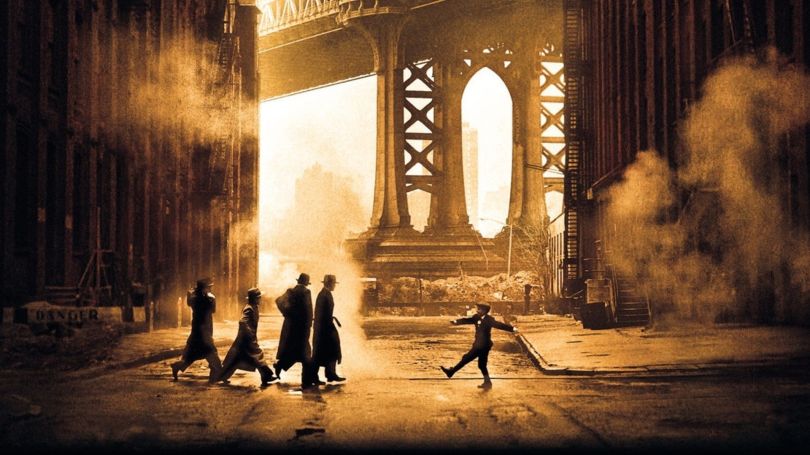
There is one shot of the younger versions of the characters walking across the street, with the Brooklyn Bridge in the distance, framed by the local buildings. I suppose this is iconic and recognisable to cinephiles. But it’s also a very beautifully constructed shot. Again, it deserved to be in a better film.
Conclusion
There you have it, I dislike ‘Once Upon A Time in America’. It’s a problematic mess that did not provide an interesting story or contribute significantly to the gangster epic genre. I’m aware that many people hold this film in high regard. But I couldn’t appreciate it the same way.
This is my first Sergio Leone film, so I hope the Dollars trilogy and Once Upon A Time in The West will change my opinions.
well, a happy new year to anyone reading! last year was a mess thanks to some severe mental health episodes. but this tradition is commencing as usual. this year has quite a long list as you’ll see…
key: ⭐ = 1 star / ✨ = 1/2 star / [film name] = rewatched
january
Saltburn (2023) ⭐✨
Carrie (1976) ⭐⭐⭐⭐
Brazil (1985) ⭐⭐✨
Focus (2015) ⭐⭐✨
Bloodsport (1988) ⭐⭐⭐✨
Bones and All (2022) ⭐⭐⭐
Casino (1995) ⭐⭐⭐⭐
Carrie (2013) ⭐⭐
february
Bottoms (2023) ⭐⭐⭐
Ghost in The Shell (1995) ⭐⭐⭐⭐
Troy (2004) ⭐⭐⭐
Manchester by The Sea (2016) ⭐⭐⭐⭐✨
march
Desperado (1995) ⭐⭐⭐
Coming to America (1988) ⭐⭐⭐✨
Is It Fall Yet? (2000) ⭐⭐⭐⭐
Platoon (1986) ⭐⭐⭐✨
Exit Strategy (2018) ⭐⭐⭐✨
Charade (1963) ⭐⭐⭐✨
Big Fish (2003) ⭐⭐⭐✨
Reality (2023) ⭐⭐⭐
Dune: Part Two (2024) ⭐⭐⭐⭐✨
A Knight’s Tale (2001) ⭐⭐⭐✨
Philadelphia (1993) ⭐⭐⭐✨
Road House (1989) ⭐⭐⭐
Road House (2024) ⭐⭐
Is It College Yet? (2002) ⭐⭐⭐⭐
Fury (2014) ⭐⭐⭐✨
A Few Good Men (1992) ⭐⭐⭐⭐
april
The General (1926) ⭐⭐⭐⭐
Steamboat Bill, Jr. (1928) ⭐⭐⭐⭐
One Week (1920) ⭐⭐⭐⭐✨
The Goat (1921) ⭐⭐⭐⭐✨
The Blacksmith (1922) ⭐⭐⭐⭐
The Electric House (1922) ⭐⭐⭐⭐
The Cook (1918) ⭐⭐⭐✨
The Great Train Robbery (1903) ⭐⭐⭐✨
The Scarecrow (1920) ⭐⭐⭐✨
Neighbors (1920) ⭐⭐⭐✨
Cops (1922) ⭐⭐⭐⭐
The Play House (1921) ⭐⭐⭐
The Paleface (1922) ⭐⭐⭐
The Haunted House (1921) ⭐⭐⭐✨
The Boat (1921) ⭐⭐⭐✨
Blacksmithing Scene (1893) ⭐⭐⭐
My Wife’s Relations (1922) ⭐⭐⭐✨
Hard Luck (1921) ⭐⭐⭐✨
The Balloonatic (1923) ⭐⭐⭐
The High Sign (1921) ⭐⭐⭐⭐
may
Top Gun (1986) ⭐⭐⭐✨
Day Dreams (1922) ⭐⭐⭐✨
The Love Nest (1923) ⭐⭐⭐✨
Dickson Experimental Sound Film (1894) ⭐⭐⭐
Monkeyshines, No. 1 (1890) ⭐⭐⭐
Monkeyshines, No. 2 (1890) ⭐⭐⭐
The Garage (1920) ⭐⭐⭐✨
The Bell Boy (1918) ⭐⭐⭐✨
The Idea of You (2024) ⭐⭐
Moonshine (1918) ⭐⭐⭐
Good Night, Nurse! (1918) ⭐⭐⭐
Where The Crawdads Sing (2022) ⭐⭐⭐
The Hayseed (1919) ⭐⭐⭐
Passage of Venus (1874) ⭐⭐⭐⭐
Dickson Greeting (1891) ⭐⭐⭐
Workers Leaving the Lumiere Factory (1895) ⭐⭐⭐
Annabelle Serpentine Dance (1895) ⭐⭐⭐✨
The Execution of Mary, Queen of Scots (1895) ⭐⭐⭐✨
Roundhay Garden Scene (1888) ⭐⭐⭐
The Lost Daughter (2021) ⭐⭐⭐✨
Convict 13 (1920) ⭐⭐⭐✨
The Wait (2020)
The Frozen North (1922) ⭐⭐⭐
His Wedding Night (1917) ⭐⭐
Love (1919) ⭐⭐⭐
A Reckless Romeo (1917) ⭐⭐
Disturbia (2007) ⭐⭐⭐✨
The Rough House (1917) ⭐⭐⭐
Runaway Train (1985) ⭐⭐⭐
Coney Island (1917) ⭐⭐⭐
Scent of A Woman (1992) ⭐⭐⭐⭐
Waves (2019) ⭐⭐⭐✨
The Butcher Boy (1917) ⭐⭐⭐
Oh, Doctor! (1917) ⭐⭐
Jada (2016)
The Perfect Gooseys (2002)
Offside (2015)
A Modest Defeat (2018)
Feeling Through (2019)
Small Arms (2017)
Gamechanger (2016)
Ari (2016)
Turning Tide (2013)
Will “The Machine” (2019)
Éclair (2016)
Grape Soda (2014)
Los Angeles 1991 (2015)
No More Wings (2019)
Tumble Dry Low (2015)
Breathless (2018)
Flying Eggs (2018)
PAWNS (2017)
Over The Wall (2018)
Guests (2014)
Rabbit (2014)
Little Grey Bubbles (2019)
Presentation (2018)
Ironied (2015)
Stop (2015)
Hitch Hike (2012)
Night (2017)
Fire (2016)
Runner (2017)
Eleven (2014)
STOP (2019)
Two Piece (2018)
Spelletjesavond (2016)
La Carnada (2014)
Game (2017)
Light My Fire (2018)
Olde E (2016)
12 Weeks (2015)
Martha the Monster (2017)
Growth (2016)
Where Have You Been (2021)
Prosopagnosia (2011)
Night Swim (2019)
Doorstep (2019)
Naysayer (2019)
Hope Dies Last (2017)
Thin Ice (2018)
Mother, Child (2017)
The Treehouse (2012)
Damage (2019)
Street Flame (2019)
Shoebox (2019)
Lucky Girl (2019)
toni_with_an_i (2019)
Re/Entry (2019)
Happy Birthday (2018)
The Cook (2022)
Toast (2017)
Pareidolia (2023)
Perfection (2020)
Uncounted (2021)
Unmask (2021)
The Cake (2022)
The Gnome (2020)
A Believer (2018)
For Milo (2020)
The Docks (2018)
6 AM (2017)
Between Days (2021)
The Black Hole (2008)
A Story (2016)
Kick Me (2018)
Employee of The Month (2017)
Run! (2021)
Mama Agnes (2023)
Child and Man (2016)
Mother (2015)
Thursday Appointment (2019)
Father (2014)
Duel (2017)
Afraid (2019)
Head Above Water (2017)
Doublespeak (2020)
Happenstance (2010)
Hyperuranios. The Hypermarket of Ideas (2020)
From Life (2018)
Rewind (2007)
Happy Valentine’s Day (2018)
F Is For Friendship (2017)
Fighter (2017)
Pieces (2020)
82 (2012)
Pull (Unknown)
Those Eyes (2016)
The Fox (2017)
Cornflower (2019)
Black Swell (2016)
A Man Falls From The Sky (2017)
Krista (2018)
Loco (2020)
Furlong (2019) ⭐⭐⭐⭐
The Things You Think I’m Thinking (2017) ⭐⭐⭐⭐✨
Back Stage (1919) ⭐⭐⭐✨
Thelma & Louise (1991) ⭐⭐⭐⭐
Three Ages (1923) ⭐⭐⭐✨
june
Fist of Fury (1972) ⭐⭐⭐✨
Out West (1918) ⭐⭐⭐
Trunk Space (2016) ⭐⭐⭐
Curve (2016) ⭐⭐⭐⭐
The Lion (2017)
Water Closet (2019)
The Seven Year Itch (1955) ⭐⭐⭐
The 39 Steps (1935) ⭐⭐⭐✨
Pulp Fiction (1994) ⭐⭐⭐⭐
Natural Born Killers (1994) ⭐⭐
Battling Butler (1926) ⭐⭐⭐⭐
july
Offline Dating (2015)
Seven Chances (1925) ⭐⭐⭐✨
RoboCop (1987) ⭐⭐⭐⭐
Once Upon A Time In America (1984) ⭐
Lazy Boy (2016)
The Misfits (1961) ⭐⭐⭐
august
The Black Phone (2021) ⭐⭐⭐
Not Without My Daughter (1991)
Snatch (2000) ⭐⭐⭐⭐
Lock, Stock and Two Smoking Barrels (1998) ⭐⭐⭐⭐
Django (1966) ⭐⭐⭐✨
Lawrence of Arabia (1962) ⭐⭐⭐⭐
september
Rocky II (1979) ⭐⭐⭐⭐
Rocky III (1982) ⭐⭐⭐
Rocky IV (1985) ⭐⭐⭐
Rocky V (1990) ⭐⭐
Rocky Balboa (2006) ⭐⭐⭐✨
A History of Violence (2005) ⭐⭐⭐⭐
october
The Menendez Brothers (2024) ⭐⭐⭐⭐✨
november
Animal (2023) ⭐✨
Swallowed (2022) ⭐⭐
The Gold Rush (1925) ⭐⭐⭐✨
Daddy (2019) ⭐⭐✨
Fracture (2007) ⭐⭐⭐
The Zone of Interest (2023) ⭐⭐⭐⭐
Leo (2023) ⭐
Vikram (2022) ⭐⭐✨
Rush Hour (1998) ⭐⭐⭐✨
december
Rush Hour 2 (2001) ⭐⭐⭐✨
The Substance (2024) ⭐⭐✨
Straight Outta Compton (2015) ⭐⭐⭐✨
Blood Diamond (2006) ⭐⭐⭐✨
They/Them (2022) ⭐✨
The Equalizer (2014) ⭐⭐✨
The Equalizer 2 (2018) ⭐⭐✨
Sherlock Jr. (1924) ⭐⭐⭐⭐⭐
so May turned out to be a busy month with plenty of short films. I have to admit though, this was caused by my OCD (it’s a long story). I also began enjoying a lot more silent films, especially films by and with Buster Keaton whom I’ve come to adore so much :’)
a slightly late happy new year (again)! since last year I posted a list of all the movies I watched, I thought I’d keep this up as a tradition on this blog. the total number of films I managed to watch throughout the year is 159! but since I log all my movie-watching activities on Letterboxd, that list does include episodes of limited/anthology series like Black Mirror. I won’t be including those, only full theatrical motion pictures. some titles also don’t have star ratings because I found myself being indecisive over what I thought about them. anyway, I’m hoping that I’ll raise this number by the end of 2024.
⭐ = one star / 💫 = half-star / [film] = rewatched
january
The Passion of The Christ (2004) – ⭐⭐⭐
Luckiest Girl Alive (2022) – ⭐⭐💫
Deep Water (2022) – ⭐
Avatar: The Way of Water (2022) – ⭐⭐⭐
Babylon (2022) – ⭐⭐⭐⭐💫
Dear Zachary: A Letter to A Son About His Father (2008)
The Killing of A Sacred Deer (2017) – ⭐⭐⭐⭐
Crash (2005) – ⭐⭐
KSI: In Real Life (2023) – ⭐⭐⭐⭐
february
Scary Movie (2000) – ⭐⭐
Maja Ma (2022) – ⭐⭐⭐
White Chicks (2004) – ⭐⭐⭐
Kindergarten Cop (1990) – ⭐⭐⭐
10 Thing I Hate About You (1999) – ⭐⭐⭐⭐💫
About Time (2013) – ⭐⭐⭐
Raiders of The Lost Ark (1981) – ⭐⭐⭐⭐
Indiana Jones and The Temple of Doom (1984) – ⭐⭐⭐💫
Scooby-Doo (2002) – ⭐⭐⭐
Indiana Jones and The Last Crusade (1989) – ⭐⭐⭐⭐
Indiana Jones and The Kingdom of The Crystal Skull (2008) – ⭐⭐💫
Mission: Impossible (1996) – ⭐⭐⭐
Mission: Impossible II (2000) – ⭐⭐⭐💫
Mission: Impossible III (2006) – ⭐⭐⭐💫
Mission: Impossible – Ghost Protocol (2011) – ⭐⭐⭐
Mission: Impossible – Rogue Nation (2015) – ⭐⭐⭐
Shutter Island (2010) – ⭐⭐⭐⭐
Mission: Impossible – Fallout (2018) – ⭐⭐⭐
march
Tenet (2020) – ⭐⭐
John Wick (2014) – ⭐⭐⭐💫
Zoolander (2001) – ⭐⭐⭐💫
Catch Me If You Can (2002) – ⭐⭐⭐⭐
Cast Away (2000) – ⭐⭐⭐💫
Amelie (2001) – ⭐⭐⭐⭐⭐
Mad Max (1979) – ⭐⭐⭐💫
Cocaine Bear (2023) – ⭐⭐⭐
Mad Max 2: The Road Warrior (1981) – ⭐⭐⭐⭐
Mad Max Beyond Thunderdome (1985) – ⭐⭐💫
Everything Everywhere All At Once (2022) – ⭐⭐⭐⭐💫
The Dark Knight (2008) – ⭐⭐⭐⭐💫
What’s Eating Gilbert Grape (1993) – ⭐⭐⭐
Carol (2015) – ⭐⭐⭐
Scream 2 (1997) – ⭐⭐⭐⭐
Scream 3 (2000) – ⭐⭐⭐
Scream 4 (2011) – ⭐⭐💫
Scream (2022) – ⭐⭐⭐
H Positive (2015)
Beverly Hills Cop (1984) – ⭐⭐⭐⭐
The Aviator (2004) – ⭐⭐⭐⭐💫
Beverly Hills Cop II (1987) – ⭐⭐⭐💫
Fantastic Mr. Fox (2009) – ⭐⭐⭐⭐💫
Beverly Hills Cop III (1994) – ⭐⭐⭐
april
Stuart Little (1999)
Rush Hour (1998) – ⭐⭐⭐💫
Rush Hour 2 (2001) – ⭐⭐⭐💫
Rush Hour 3 (2007) – ⭐⭐💫
PAM – ⭐⭐⭐💫
Floppy Toast with Drippy Butter (2021)
Liar Liar (1997) – ⭐⭐⭐💫
Back To The Future (1985) – ⭐⭐⭐⭐⭐
Gravity (2013) – ⭐⭐⭐💫
may
Back To The Future Part II (1989) – ⭐⭐⭐⭐
Guardians of The Galaxy Vol. 3 (2023) – ⭐⭐⭐💫
Back To The Future Part III (1990) – ⭐⭐⭐💫
Lamb (2021) – ⭐⭐
Funny Games (1997) – ⭐⭐⭐⭐
Swimming Pool (2003) – ⭐⭐
Charlie’s Angels (2000) – ⭐⭐⭐
Funny Games (2007) – ⭐⭐⭐💫
Melancholia (2011) – ⭐⭐⭐💫
The Last House on The Left (1972) – ⭐
A Time to Kill (1996) – ⭐⭐⭐💫
june
Girl, Interrupted (1999) – ⭐⭐⭐
Spider-Man: Across The Spider-Verse (2023) – ⭐⭐⭐⭐💫
Gladiator (2000) – ⭐⭐⭐💫
The Girl with The Dragon Tattoo (2011) – ⭐⭐⭐⭐
Old (2021) – ⭐⭐
Titane (2021) – ⭐⭐💫
Schindler’s List (1993) – ⭐⭐⭐⭐💫
JFK (1991) – ⭐⭐⭐
The Strange Thing About The Johnsons (2011)
In Bruges (2008) – ⭐⭐⭐⭐
july
Unbroken (2014) – ⭐⭐⭐
My Fault (2023) – ⭐⭐
L.A. Confidential (1997) – ⭐⭐⭐💫
Apollo 13 (1995) – ⭐⭐⭐💫
Peel (1982) – ⭐⭐⭐
12 Angry Men (1957) – ⭐⭐⭐⭐⭐
Purple Hearts (2022)
Crazy, Stupid, Love. (2011) – ⭐⭐⭐
American Gangster (2007) – ⭐⭐💫
Wind River (2017) – ⭐⭐⭐💫
Sicario (2015) – ⭐⭐⭐
Unfaithful (2002) – ⭐⭐⭐
august
The Truman Show (1998) – ⭐⭐⭐⭐
Barbie (2023) – ⭐⭐⭐⭐
Some Like It Hot (1959) – ⭐⭐⭐⭐💫
Under The Silver Lake (2018) – ⭐⭐⭐
Red, White & Royal Blue (2023) – ⭐⭐⭐💫
The Girl Chewing Gum (1976) – ⭐⭐⭐💫
Dad’s Stick (2012) – ⭐⭐⭐
The Beat Beneath My Feet (2014)
september
Oppenheimer (2023) – ⭐⭐⭐⭐💫
As Good As It Gets (1997) – ⭐⭐
Decision To Leave (2022) – ⭐⭐⭐
Raging Bull (1980) – ⭐⭐⭐⭐💫
A Summer’s Tale (1996) – ⭐⭐⭐⭐⭐
The House That Jack Built (2018) – ⭐
Drive My Car (2021) – ⭐⭐⭐⭐💫
A Woman Under The Influence (1974)
october
Orbital: The Box (1996)
Aliens (1986) – ⭐⭐⭐⭐💫
Alien 3 (1992) – ⭐⭐
Alien Resurrection (1997) – ⭐💫
The Usual Suspects (1995) – ⭐⭐⭐
The Nice Guys (2016) – ⭐⭐⭐⭐
Killers of The Flower Moon (2023) – ⭐⭐⭐⭐
There’s Nothing Out There (1991) – ⭐⭐⭐
november
Enemy (2013) – ⭐⭐⭐💫
Get Ready (1999)
Manufractur (1985)
Four Brothers (2005) – ⭐⭐⭐💫
Fargo (1996) – ⭐⭐⭐⭐
Paths of Glory (1957) – ⭐⭐⭐⭐
Thunderball (1965) – ⭐⭐⭐
On Her Majesty’s Secret Service (1969) – ⭐⭐⭐💫
The Man with The Golden Gun (1974) – ⭐⭐⭐
The Spy Who Loved Me (1977) – ⭐⭐⭐💫
Moonraker (1979) – ⭐⭐⭐
For Your Eyes Only (1981) – ⭐⭐⭐💫
A View to A Kill (1985) – ⭐⭐⭐💫
The Living Daylights (1987) – ⭐⭐⭐💫
Licence to Kill (1989) – ⭐⭐⭐⭐
Tomorrow Never Dies (1997) – ⭐⭐⭐⭐
The World Is Not Enough (1999) – ⭐⭐⭐
Die Another Day (2002) – ⭐⭐💫
Quantum of Solace (2008) – ⭐⭐⭐
Spectre (2015) – ⭐⭐⭐
Never Say Never Again (1983) – ⭐⭐
december
Network (1976) – ⭐⭐⭐⭐
Traction (2015)
Handsome Devil (2016)
Charlie’s Angels: Full Throttle (2003) – ⭐⭐
Die Hard (1988) – ⭐⭐⭐⭐💫
as you can see, this year had a few franchise marathons that I intended on bingeing. glad to say that I was successful with some of them 🙂
First things first, a slightly late happy new year! Now, I was wondering on how to kick-start the new year on this blog and quickly thought of summarising all the films I was able to watch in 2022. So I have compiled the list below with their star ratings out of 5 🙂
⭐ = one star / 💫 = half-star / [film] = rewatched
january:
The Things You Think I’m Thinking (2017) – ⭐⭐⭐⭐💫
tick, tick…BOOM! (2021) – ⭐⭐⭐
The Power of The Dog (2021) – ⭐⭐
A Trip to The Moon (1902) – ⭐⭐⭐⭐⭐
Steamboat Willie (1928) – ⭐⭐⭐
Sleeping Beauty (1959) – ⭐⭐⭐💫
Iron Man 2 (2010) – ⭐⭐💫
Thor (2011) – ⭐⭐💫
Sherlock, Jr. (1924) – ⭐⭐⭐⭐⭐
Martha Marcy May Marlene (2011) – ⭐⭐⭐💫
Thor: The Dark World (2013) – ⭐
Captain America: The Winter Soldier (2014) – ⭐⭐⭐⭐
Bro Daddy (2022) – ⭐⭐💫
february:
Little Women (2019) – ⭐⭐⭐💫
Princess Mononoke (1997) – ⭐⭐⭐⭐⭐
Atonement (2007 – ⭐⭐⭐💫
Marie Antoinette (2006) – ⭐⭐⭐💫
Guardians of The Galaxy (2014) – ⭐⭐⭐💫
Avengers: Age of Ultron (2015) – ⭐⭐⭐
Guardians of The Galaxy Vol. 2 (2017) – ⭐⭐⭐⭐
march:
Black Panther (2018) – ⭐⭐⭐💫
Captain Marvel (2019) – ⭐⭐💫
Black Widow (2021) – ⭐⭐
Eternals (2021) – ⭐⭐💫
The Batman (2022) – ⭐⭐⭐⭐⭐
The Lighthouse (2019) – ⭐⭐⭐⭐💫
Blow (2001) – ⭐⭐⭐
The Princess and The Frog (2009) – ⭐⭐⭐💫
West Side Story (2021) – ⭐⭐⭐
Nightmare Alley (2021) – ⭐⭐💫
Eternal Sunshine of The Spotless Mind (2004) – ⭐⭐⭐⭐⭐
Don’t Look Up (2021) – ⭐⭐
The Eyes of Tammy Faye (2021) – ⭐⭐
april:
Three Billboards Outside Ebbing, Missouri (2017) – ⭐⭐⭐💫
Joy (2015) – ⭐
Hidden Figures (2016) – ⭐⭐⭐
Boys Don’t Cry (1999) – ⭐⭐💫
Quills (2000) – ⭐💫
The Good Son (1993) – ⭐💫
The Help (2011) – ⭐⭐⭐💫
The Fly (1986) – ⭐⭐⭐⭐
Can You Ever Forgive Me? (2018) – ⭐⭐
Lady and The Tramp (1955) – ⭐⭐⭐
Walk The Line (2005) – ⭐⭐⭐
American Murder: The Family Next Door (2020)
Brothers (2009) – ⭐⭐⭐
may:
A Night in The Show (1915) – ⭐⭐💫
Spider-Man (2002) – ⭐⭐⭐⭐⭐
Silver Linings Playbook (2012) – ⭐⭐⭐
Tuck Everlasting (2002) – ⭐⭐⭐
Edward Scissorhands (1990) – ⭐⭐⭐⭐💫
june:
She’s The Man (2006) – ⭐⭐⭐💫
Ammonite (2020) – ⭐
RRR (2022) – ⭐⭐⭐
Laughing Gas (1914) – ⭐⭐⭐
july:
Doctor Strange In The Multiverse of Madness (2022) – ⭐⭐















 cinem(a)shika.